
S-Corp for IT Services Firms
A clear, practical guide to lowering self-employment taxes and building a scalable payroll system
If you run an IT services firm (IT consulting, MSP, cybersecurity, cloud migration, development services, staffing, or tech support), an S-Corp election can be one of the most valuable upgrades you make—when your profit level and compliance readiness are right. This page explains:
- What an S-Corp is (in plain English)
- When it typically becomes beneficial for IT firms
- How reasonable salary works
- What mistakes to avoid
- The exact setup steps
Why IT Firms Often Overpay Taxes Without an S-Corp
Many IT firms have:- Strong margins and expertise-driven revenue
- Recurring monthly contracts (MSP retainers)
- Low inventory and relatively low overhead
- Owner-led delivery and high billable value
What an S-Corp Is
An S-Corp is not always a separate “type of business.”It’s typically a tax election made for an LLC or corporation. With an S-Corp:
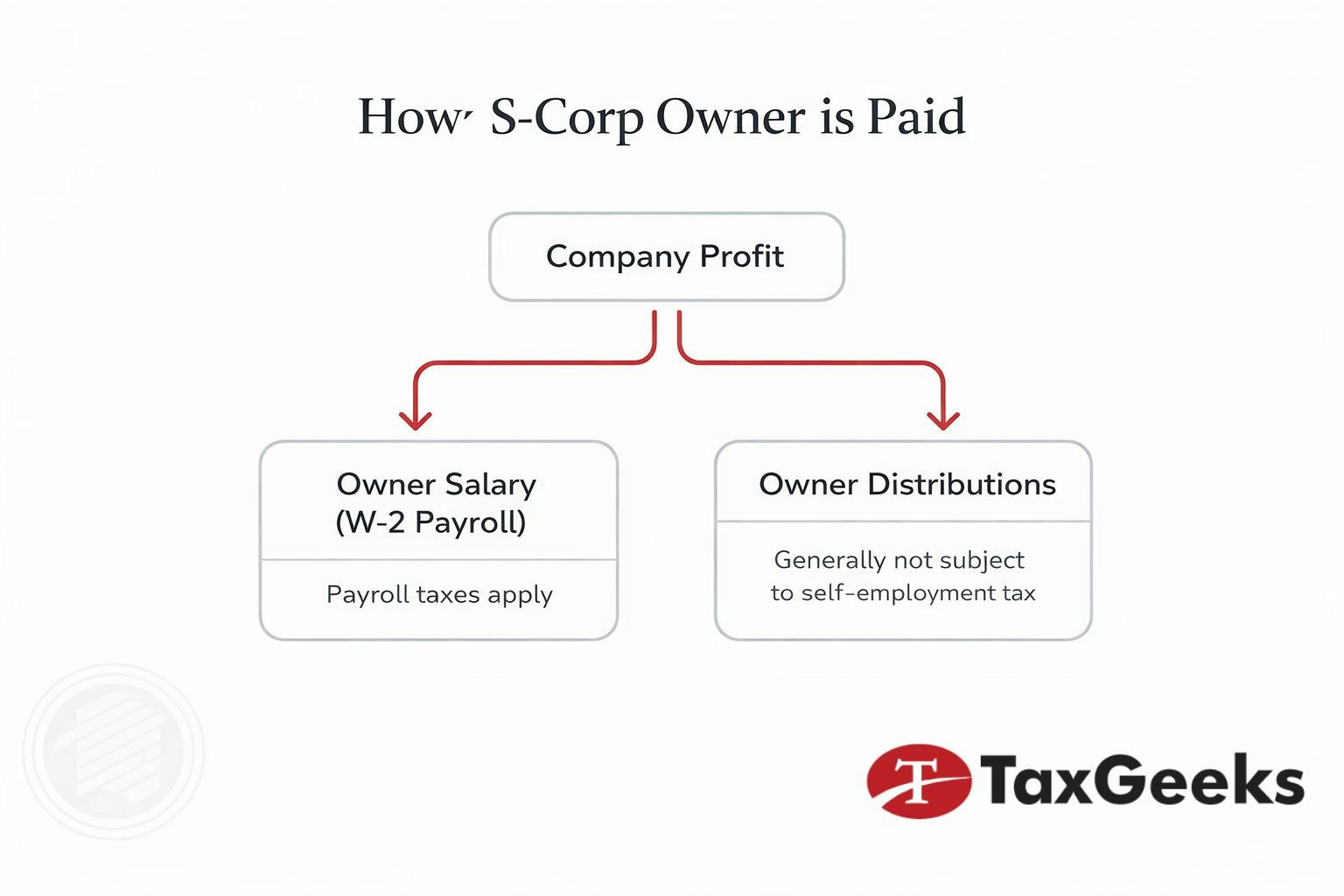
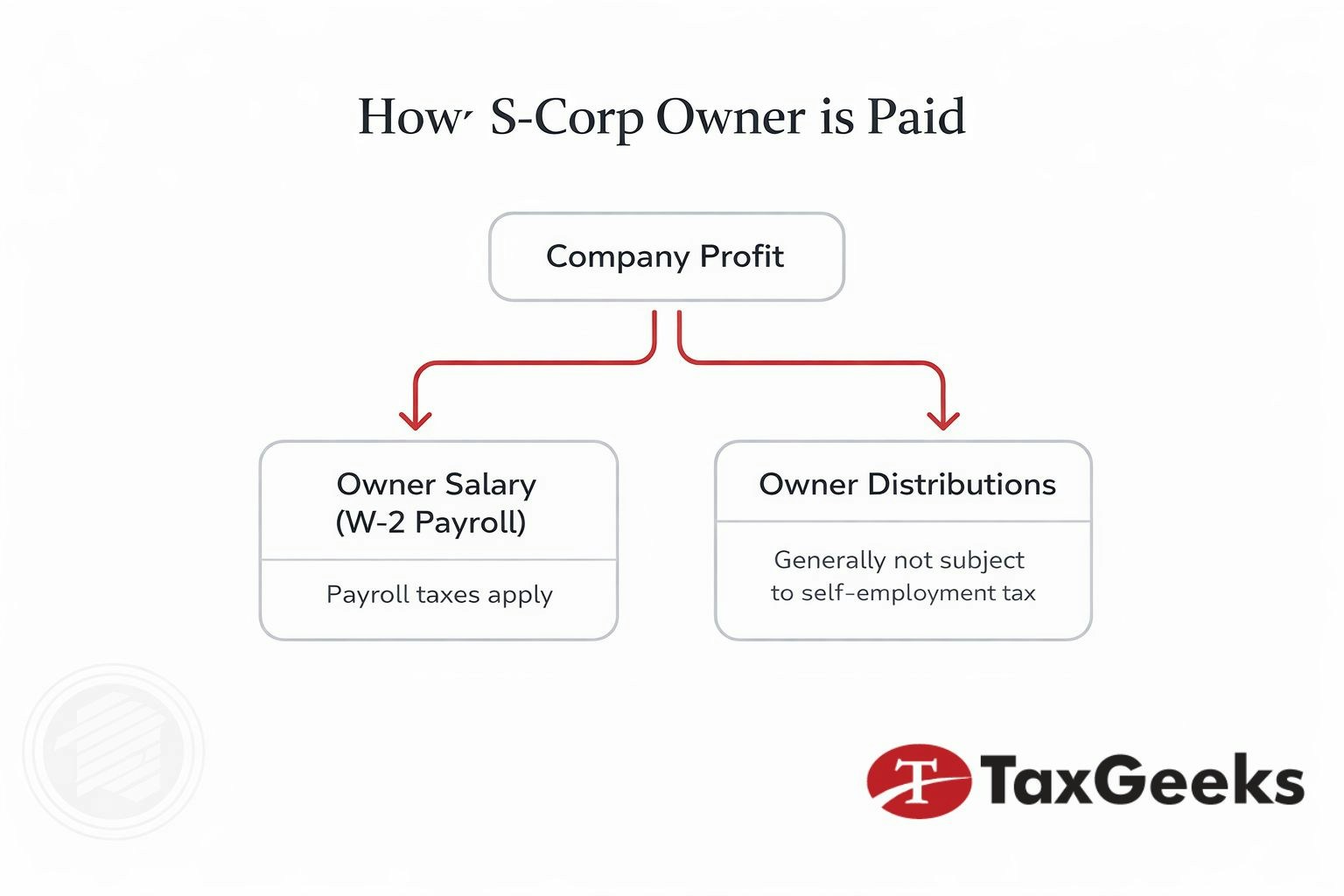
- The owner who works in the business must receive a reasonable salary through payroll (W-2).
- Additional profit may be paid as distributions.
The #1 Reason IT Firms Choose an S-Corp: Potential SE Tax Savings
In many cases, an IT firm owner operating as a sole proprietor pays self-employment taxes on most business profit. With an S-Corp, the owner is paid in two parts:- W-2 Salary (subject to payroll taxes)
- Distributions (generally not subject to self-employment tax)
S-Corp savings depend on your profit, your role, and a compliant reasonable salary. The goal is not a low salary—it’s the right salary.
Understanding “Reasonable Salary” (And Why It’s Not Something to Fear)
The IRS requires S-Corp owner-employees to take a reasonable salary for the work they perform. Reasonable salary is based on factors like:- Your role (lead consultant, IT director, sales/BD, operations)
- Hours worked
- Market pay for similar positions
- Your company’s profitability and ability to pay
When an S-Corp Usually Starts Making Sense
Because S-Corps require payroll and stronger bookkeeping, they’re typically best once the business has consistent profit. Many IT service firms begin evaluating an S-Corp when net profit is consistently around:- 60k+ (early consideration)
- 100k+ (often strong fit)
- $100k+ (frequently compelling if payroll and books are clean)
- Your state rules/fees
- Your current structure and income mix
- Your payroll reality and compliance capacity
Examples (IT Services Scenarios)
Example 1: Solo Consultant (High Margin)
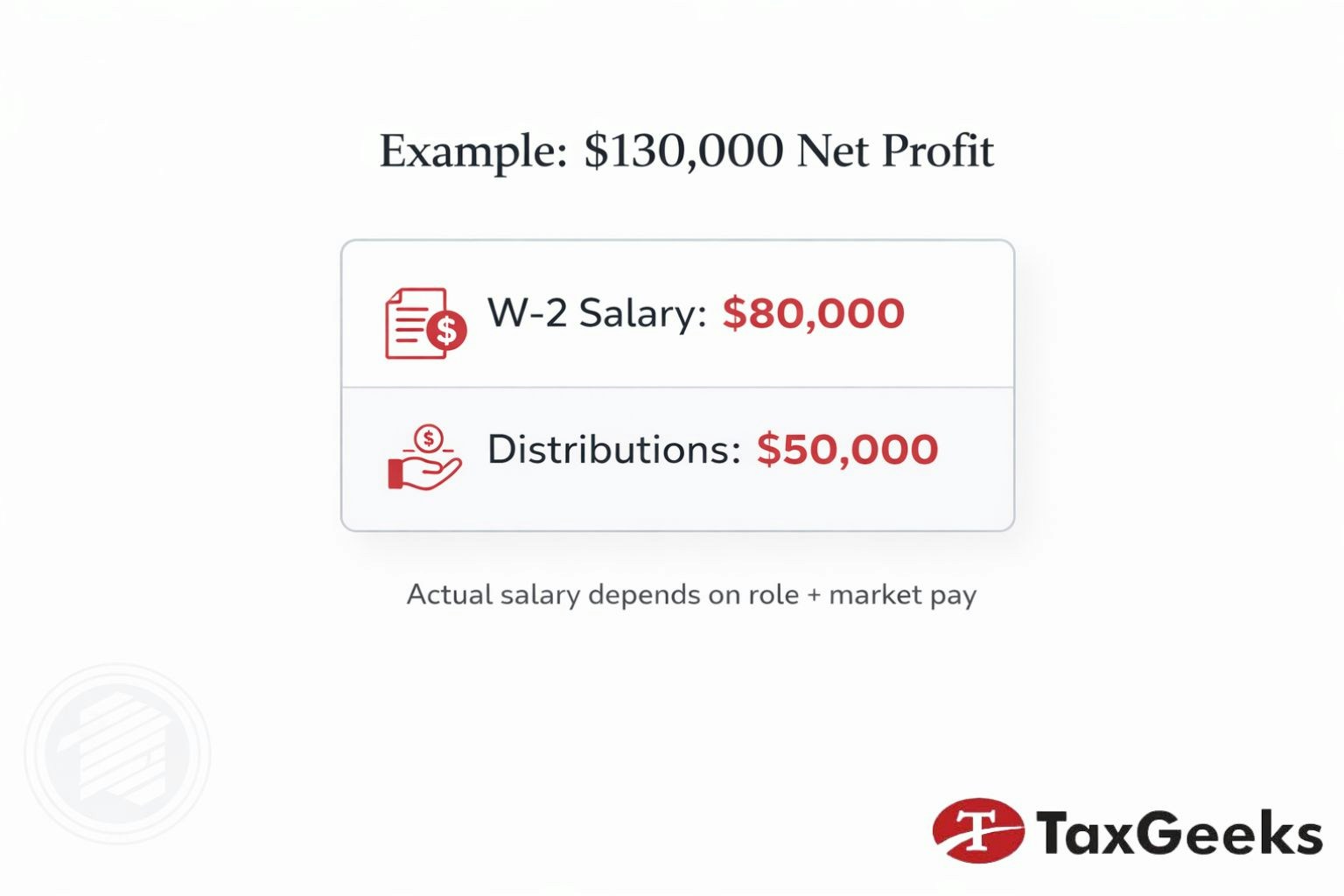
- Net Profit: $130,000
- Possible approach: pay a reasonable salary for your role and take remaining profit as distributions.
Example 2: MSP Owner (Recurring Contracts)
- Net Profit: $180,000
- Common approach: salary aligned with leadership + technical escalation role, with additional profit as distributions.
Example 3: Agency Owner Using Contractors
- Net Profit: $170,000
- Often works well when books are clean and payroll cadence is established.
Benefits Beyond Tax Savings (Why IT Owners Like This Structure)
Even when the tax savings are modest, many owners still prefer the S-Corp because it creates:- Consistent owner payroll (financial discipline)
- Cleaner separation between business and personal finances
- Improved reporting for lenders and leases (W-2 income can help)
- Better scalability for hiring and growth
- Stronger “real company” structure for B2B contracts
Common S-Corp Mistakes (And How We Prevent Them)
Avoid these pitfalls:- Setting salary too low (audit risk)
- Paying personal expenses incorrectly through the business
- Inconsistent payroll
- Messy bookkeeping
- Missing or mishandling election timing and compliance
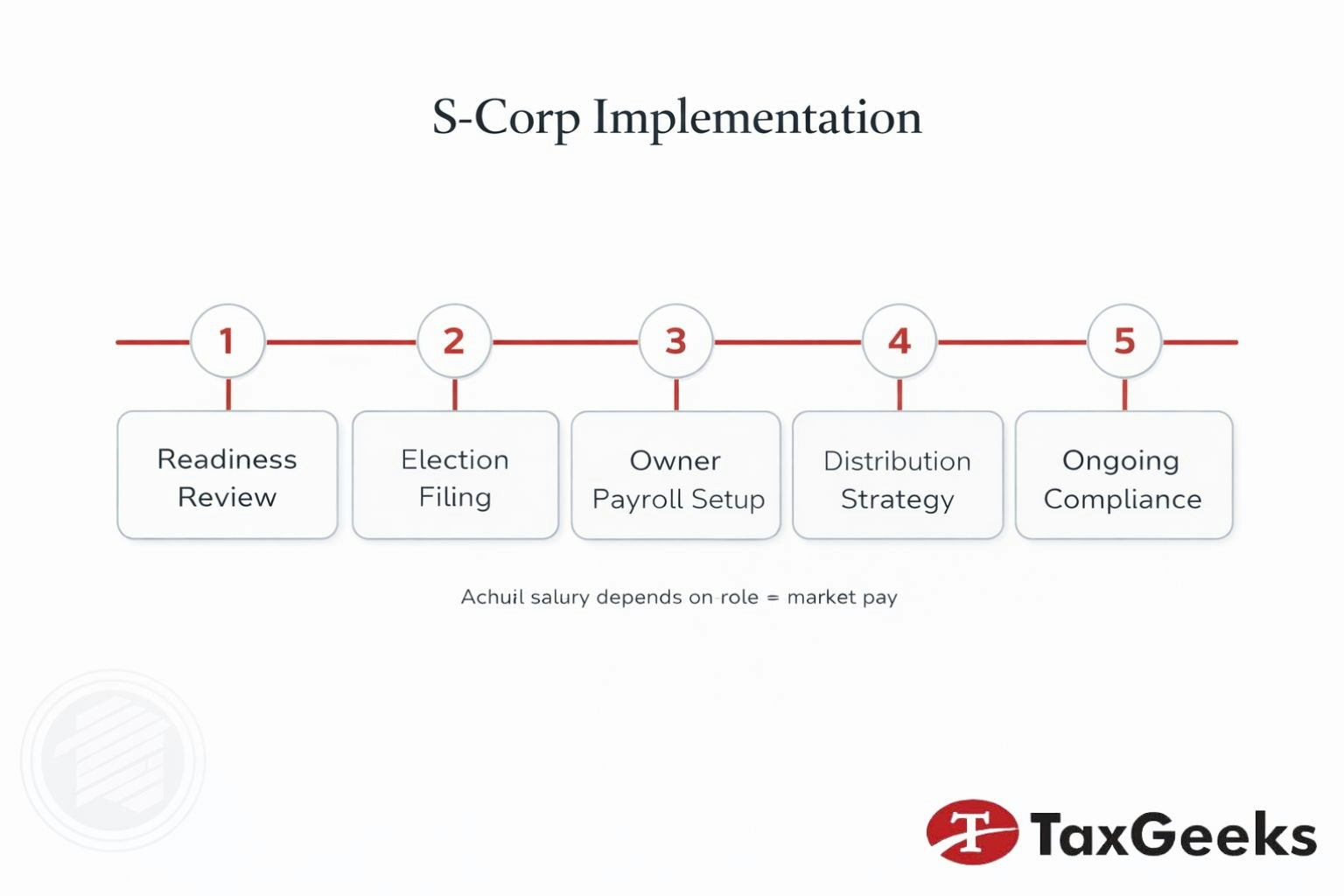
Step-by-Step: How We Implement an S-Corp for an IT Services Firm
- S-Corp Readiness Review
We review profit, role, payroll reality, state factors, and compliance readiness. - Entity & election setup
In many cases, your existing LLC can remain the legal entity and elect S-Corp taxation. - Owner payroll setup
We set payroll schedule, withholding, and a reasonable salary approach. - Distribution strategy
We establish a compliant rhythm for distributions with clean bookkeeping entries. - Ongoing compliance
Payroll filings, bookkeeping discipline, and year-end tax filings.
What We Need From You (Client Checklist)
To make the right recommendation and implement correctly:- Prior-year tax return (business + personal)
- Year-to-date P&L and balance sheet (or bookkeeping access)
- Current entity details (LLC? EIN? State?)
- Your role + weekly hours estimate
- Payroll history (if any)
- Owner draws/distributions history
FAQ
Will an S-Corp reduce my income tax?
Not automatically. The main savings typically comes from reducing exposure to self-employment tax, not from lowering your income tax rate.Do I have to run payroll if it’s only me?
Yes. If you work in the business as an owner, payroll is a core requirement of S-Corp compliance.What if my income is inconsistent month-to-month?
Very common in IT. We generally set a stable salary and use distributions for the variable profit portion, while staying compliant.Is an S-Corp always worth it?
No. If profits are low or bookkeeping/payroll isn’t ready, the extra complexity may outweigh the benefits.Next Step: S-Corp Readiness Review (Recommended)
If you’re consistently profitable, we can review your numbers and provide a clear recommendation. Book an S-Corp Readiness Review:- We estimate the potential savings range
- We propose a reasonable salary approach
- We outline payroll + bookkeeping requirements
- You get a simple yes/no recommendation with next steps